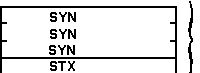
may contain several packets


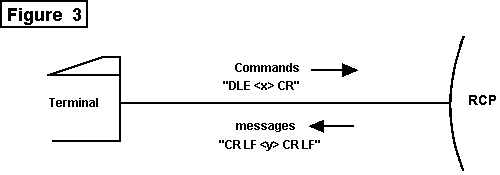
| Commands <x> | |
| "A [ + | - ] <callee's add> <caller's add complement >]" | : call request |
| (+ means COLLECT CALL) | |
| "L" | : clear down request |
| "F" | : end of transmission request |
| "I" | : initialization request |
| "" | : ineffective |
| Messages <y> | |
| "% APP [ + | - ] <callee's add> [,<caller's add>]" | : call request confirmation |
| "% COM" | : connection confirmation |
| "% COM [ + | - ] <callee's add>, <caller's add> " | : incoming call indication |
| "% LIB" | : clear down confirmation |
| "% LIB [R < cause1 > | C <cause2 >]" | : clear down indication |
| [R means NETWORK, C means OTHER CUSTOMER] | |
| "% FIN" | : end of transmission confirmation |
| "% INI" | : initialization |
| "% ERR" | : command in error |
| "% PER" | : data loss due to the lock of flow control |
| End of message markers (TTY to RCP) | |
| "ETX" | : end of message |
| Transparency (TTY to RCP) | |
| "DLE DLE" | : DLE to other customer |
| "DLE ETX" | : ETX to other customer |
| Flow control | |
| 1) From RCP "XOFF" | : stop sending |
| "XON" | : resume sending |
| 2) To RCP "DLE" | : stop sending |
| "CR" | : resume sending |
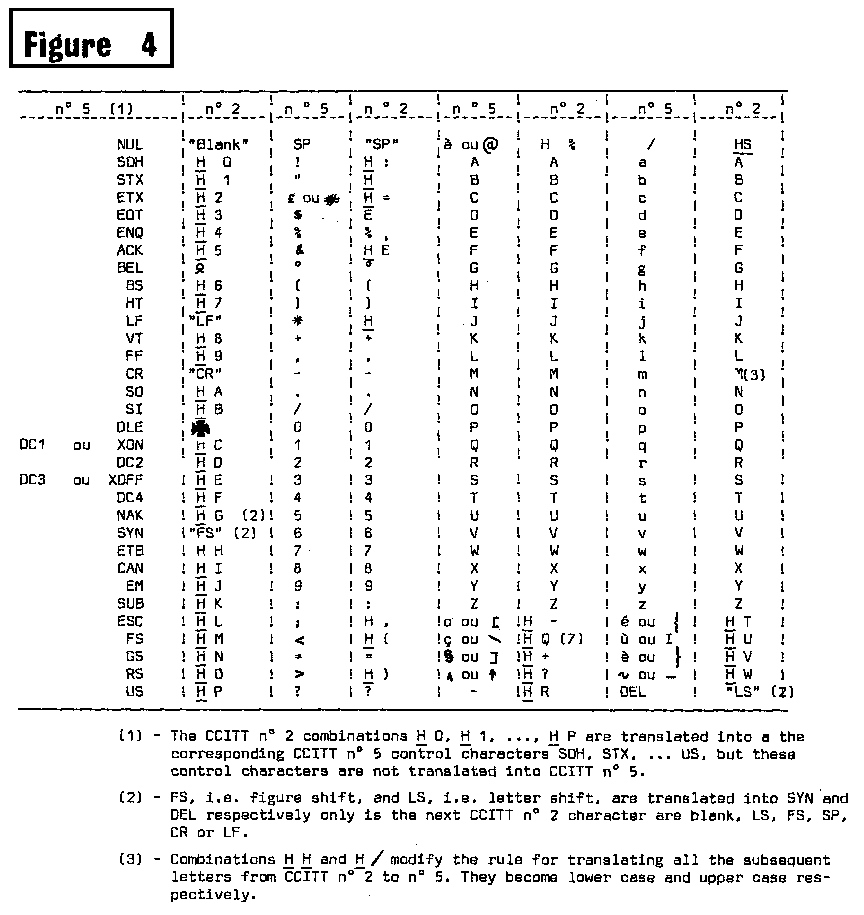
(1) - The CCITT no 2 combinations H 0, H 1, ...H P are translated into the corresponding CCITT no 5 control characters SOH, STX,... US, but these control characters are not translated into CCITT no 5.
(2) - FS, i.e. figure shift, and LS,i.e. letter shift are translated into SYN and DEL respectively only if the next CCITT no 2 character is one of: blank, LS, FS, SP, CR or LF.
(3) - Combinations H H and H / modify the rule for translating all the subsequent letters from CCITT no 2 to no 5. They become lower case and upper case respectively.
Figure 5 |
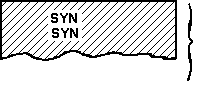
synchronization procedure |
|
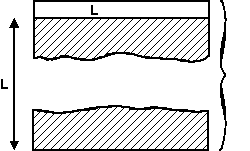
variable length block 0 ≤ L ≤ 255
may contain several packets |
|
service fields |
|
cyclic redundancy field |
|
variable length padding |
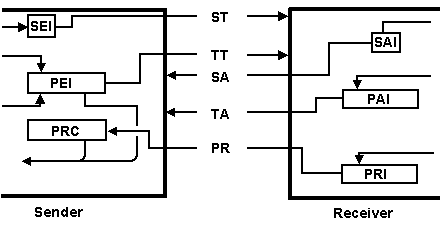
TD = type of the frame:
|
| |
| ST = sequence number |
| TT = frame number |
| SA = expected sequence number |
| TA = expected frame number |
TR = frame number for which there
|
|
+1 if SA ≠ SEI + after transmission TA if SAI ≠ SAI if PEI ≠ PRC then all |
|
+ 1 if ST = SAI and +1 if ST = SAI and +1 when a new buffer |
| V logical channel number TP Type of packet |
|
| 0 service packet; cf CV field
1 PR or "ready to receive" packet 2 unused 3 D or "data packet" |
|
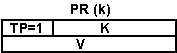 |
K number of additional bytes which can be accepted |
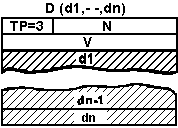 |
N number of data bytes which follow |
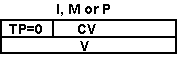 |
CV subtype of a service packet 0 I or "initialization" packet
|
B. EXAMPLE OF UTILIZATION
| Sender : |  |
| Receiver : |  |
bytes which are transmitted sequentially on channel 0
bytes 10101010 (=command separator) are duplicated when transmitted
| A. CALL REQUEST | |
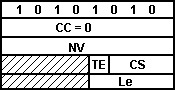 |
command separator command code logical channel number TE=1 if collect call; CS = class of service |
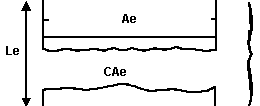 |
callee's identification
A = address of a subscriber, CA = address complement |
 |
|
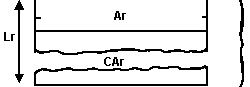 |
caller's identification |
| B. CLEAR DOWN | |
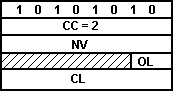 |
command separator |
| OL = |
|
|||||||
| OL = 1 then CL= |
|
C. CONNECTION CONFIRMATION AND END OF TRANSMISSION
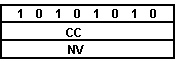 |
command separator |
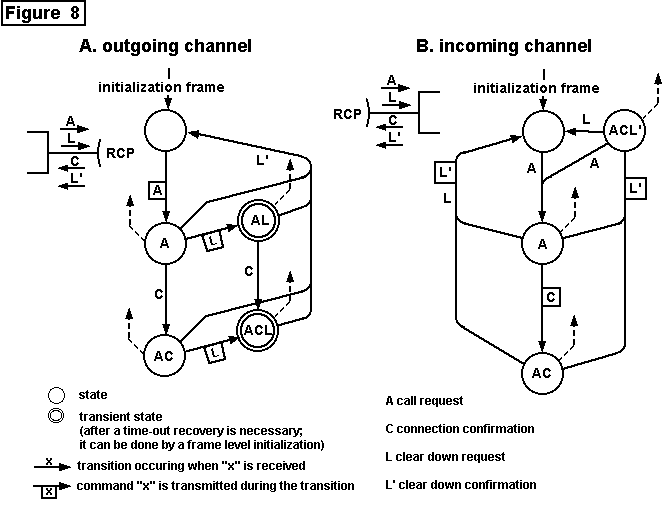
Two minor changes have been made to Figure 8: Outgoing channel: line between states AC & ACL with label C has benn given an arrowhead. Incoming channel: Labelling of line from state ACL' to state A has been slightly changed to make it obvious that either message L or message A can be received in state ACL'.